Physician • Humanitarian • Author

Kamel
Mohanna

A life devoted to human dignity

1943Born in Khiam
1975Humanitarian engagement
1978Foundation of Amel
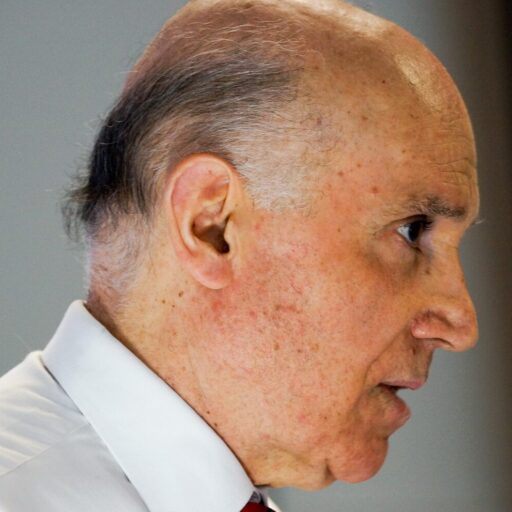
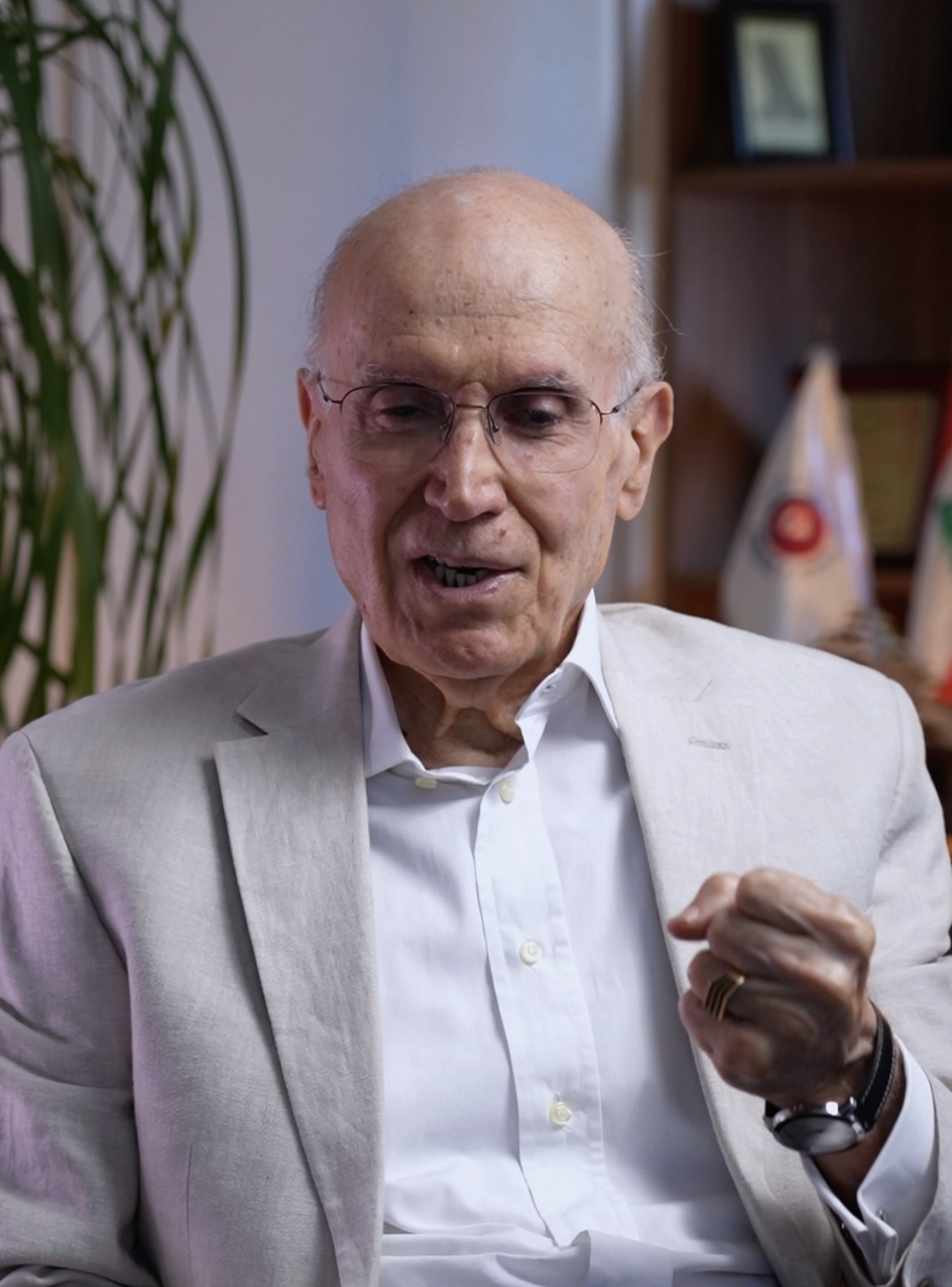
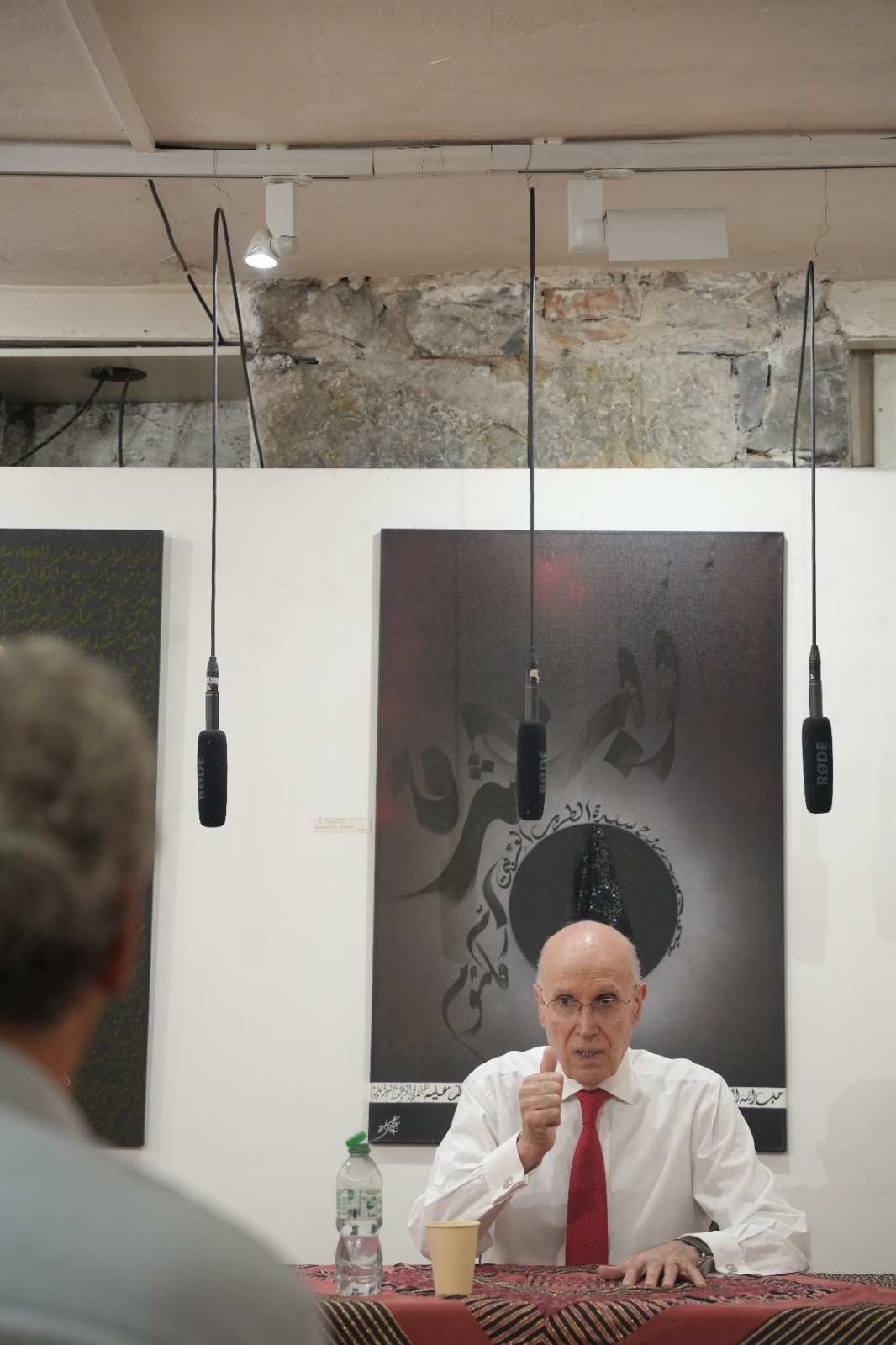
Portrait of Dr Kamel Mohanna during an interview in 2026
Dr Kamel Mohanna

Kamel Mohanna (born in 1943 in Khiam, a village in South Lebanon) is an author and medical doctor. After receiving his State Diploma in Medicine from the University of Tours, he began his professional career as a pediatrician before becoming involved in humanitarian work at the outbreak of the Lebanese Civil War in 1975.

In response to the second Israeli invasion of South Lebanon in 1978 (Operation Litani), he founded Amel Association to provide emergency assistance to victims of the war.

A vision transformed into an institution Healing, acting and rebuilding alongside communities.

A professor at the Lebanese University, Mohanna is also the General Coordinator of both the Lebanese NGO Network and the Arab NGO Network. He is a recognized expert, particularly in the field of health, and has advised international organizations such as the World Health Organization.

He was a member of one of the preparatory groups for the World Humanitarian Summit, held in Istanbul in 2016, and represented Amel Association International in several forums, including the Mediterranean Citizens’ Assembly, HAP, ICVA (International Council of Voluntary Agencies), and the United Nations Economic and Social Council (ECOSOC).

Dr Kamel Mohanna played a crucial role in the reconstruction of Lebanon following the civil war. A leading figure in humanitarian work in Lebanon, he is a respected public figure both in his country and abroad.

He is also the author of several publications, and his biography has appeared in several editions in both Arabic and French.

Kamel Mohanna • BiographyChapter 01

Childhood
& Education

The border village, family sacrifices and political awakenings that shaped a lifelong commitment to medicine, justice and human dignity.

Kamel Mohanna
Kamel Mohanna at the Human Rights Council
Origins

Birth and Sociopolitical Context

Born in Khiam, a border town in southern Lebanon near the Lebanese, Syrian and Palestinian borders, Kamel Mohanna was named in tribute to Kamel Beik Assaad. He grew up in a village profoundly affected by the Nakba, the first mass displacement of Palestinians in 1948. He would only become acquainted with Beirut later in life, as Palestine and Syria were geographically more accessible.

This reality exposed him from the age of five to occupation and to the plight of Palestinians who sought refuge in Lebanon following the establishment of the State of Israel. His childhood was also shaped by the struggle to assert oneself in the shadow of the village’s powerful notables, who sought to monopolize education and keep the poor as a source of labor, at times attacking them with axes and subjecting them to repeated insults.

Learning

Family, Youth, and Education

The tenth of eleven children—six boys and five girls—Kamel Mohanna was raised in a modest family where every possible saving was devoted first and foremost to the children’s education, at a time when formal education was not customary among peasant families. His parents worked tirelessly to ensure that their children received an education.

His brother Aziz became an engineer, Amir a teacher, Issam a banker, Ahmad a judge, while Mohammad and Kamel became physicians. This “educational advancement” displeased the village’s wealthy families.

After completing his primary and intermediate education at Khiam Public School, which did not offer upper-level classes, Mohanna obtained his intermediate school certificate from a public school in Sidon. He then attended the secondary school in Ein el-Hilweh and earned his mathematics-track baccalaureate from Raml El-Zarif Secondary School in Beirut.

Early calling

Mohanna excelled in mathematics and physics. The tragedy endured by Palestinian families inspired his desire to become a doctor and became an enduring source of his resistance to injustice. He assisted his brother Mohammad, who had become a physician, by administering injections and dressing wounds.

His father, Assaad, was a livestock trader who traveled between Lebanon, Syria and Palestine, and served for 40 years as vice-president of the municipal council. While in Syria, he discovered that children were being sent to Saint Joseph University of Beirut to study. To fulfill his son’s ambition of studying in France, Assaad sold a piece of land. At the time, pursuing an education abroad was uncommon for someone from a modest family.

In 1962, Kamel Mohanna boarded an Italian ship bound for France. There, he studied not only medicine but also Enlightenment ideas, amid the political activism that shaped the youth of the 1960s—including the far left, Guevarist ideals and the Palestinian cause.

Medicine • Commitment • Resistance

An Engaged
Student

Words and action in the service of just causes

1967A political turning point
1968Mobilization in Paris
1970Doctorate in medicine
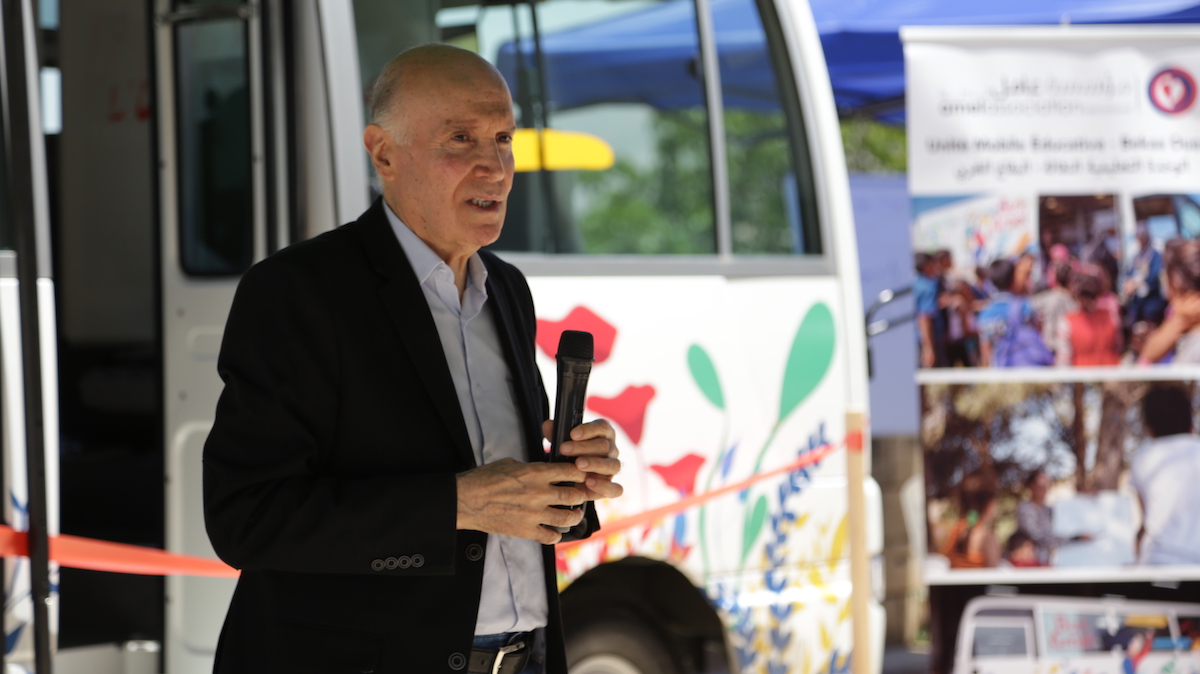
Kamel Mohanna during the inauguration of the Amel Centre in Hermel
Kamel Mohanna — Amel Centre, Hermel

Early Activism

He initially settled in Lyon, but his fondness for smaller cities led him and his friend Jean Hatem to draw lots among three towns he liked. Grenoble was chosen, and it was there that he spent his first year of medical school and began shaping his activism by establishing an association for Lebanese students.

In Grenoble, he also experienced his first platonic love, with Brigitte. Remembering that his father had sent him to France to specialize in medicine rather than to marry, he apologized to her and left Grenoble for Tours in order to distance himself from that relationship.

He took with him to Tours the statutes and internal regulations of the Lebanese students’ association and was elected head of its cultural committee. He formed a dabke troupe and taught the dance to French people. The association paved the way for the establishment of the General Union of Lebanese Students in France (UGELF). Kamel Mohanna was elected its Secretary-General while still in his second year of university.

Grenoble • ToursMedicine, culture, and student organization became the three pillars of his engagement.

Political Context

The year 1967 marked a turning point in Kamel Mohanna’s public and political development. The Six-Day War, the Israeli aggression against Egypt and Palestine, and the Arab defeat drove Arab students into hiding to escape insults and ridicule. At that moment, the young Kamel realized that strength could only be meaningful when placed at the service of just causes.

He subsequently became active within the radical left wing of the Palestinian resistance. He listened to Ahmed Saeed on the radio proclaiming victory while the Arab world was, in reality, suffering defeat, and concluded that a balance had to be struck between words and actions. He therefore resolved to reconcile speech with action throughout his life by practising medicine in support of oppressed peoples—unlike Che Guevara and George Habash, who had abandoned the medical profession.

Mobilization Against the 1968 Israeli Attack

On the night of 28–29 December 1968, following repeated threats, Israel launched a commando raid against Beirut International Airport, destroying 14 civilian aircraft belonging to Middle East Airlines (MEA), Trans Mediterranean Airways, and Lebanese International Airways (LIA). The latter subsequently went bankrupt and ceased operations.

On behalf of the Union, Kamel Mohanna wrote to French President General Charles de Gaulle, urging him to condemn Israel and take a stand in support of Lebanon.

To protest the Lebanese army’s failure to respond to the attack, Kamel Mohanna and the UGELF occupied the premises of the Lebanese Embassy in Paris for 24 hours. Lebanese Ambassador Philippe Takla proposed that they leave the premises in return for his publicly stating that the sit-in had lasted 24 hours. Kamel Mohanna rejected the bargain.

He was subsequently investigated, and the intelligence services asked him to cooperate with them. He refused to disclose the names of the other participants.

24 hoccupation of the Lebanese Embassy premises in Paris

Mobilization in Support of the Palestinian Resistance

On 23 April 1969, a demonstration in support of Palestinian fedayeen took place in Beirut’s Barbir district. Clashes erupted between Palestinians and the Lebanese gendarmerie, leaving 14 people dead and more than 80 wounded.

The UGELF decided to occupy both the Lebanese Embassy in Paris and the Lebanese Consulate in Marseille. Kamel was nicknamed “the Arab Cohn-Bendit,” after Daniel Cohn-Bendit, one of the leading figures of the May 1968 student movement in France.

The French border police summoned Kamel Mohanna for questioning. Raymond Marcellin, then Minister of the Interior, signed a deportation order declaring him a threat to French security. He was given 48 hours to leave French territory.

Kamel decided not to leave, arguing that he was working non-violently on behalf of his country and mobilizing Lebanese, Arab, and French students. His case attracted international media attention. The dean of the Faculty of Medicine objected to the expulsion of a student without prior consultation, particularly as the order had been issued only two days before Kamel’s sixth-year medical examinations.

At the time, Kamel belonged to the radical left, and his lawyer was Roland Dumas. Amid a major wave of public support, the National Union of Students of France (UNEF) launched a petition that was signed, among others, by Jean-Paul Sartre. Following the protests, the deportation order was revoked.

The Algerian ambassador to France offered him a scholarship to complete his studies in Algeria, but he declined. Kamel asked his family not to inform his father, who suffered from heart problems. His father, however, was already aware of the developments and was proud of his son.

Kamel Mohanna received his doctorate in medicine from the University of Tours in 1970.

He then passed the ECFMG examination with the intention of specializing in surgery in Canada. Despite his success, he changed his mind because he wanted to work directly with people in the public sphere, and instead chose to specialize in paediatrics.

Upon returning to France for his specialization, he held a press conference to explain the circumstances surrounding the deportation order. The police summoned him and asked him to sign a pledge not to become involved in politics. He refused, although he agreed not to interfere in France’s domestic political affairs. Dissatisfied, the police took steps to have his internship offer at Nevers Hospital withdrawn.

When asked where his strong sense of responsibility came from, he replied simply: “I had to rise to the occasion.”

The Mountains of Dhofar

After earning his qualification in paediatrics from the University of Grenoble in 1974, Kamel Mohanna joined the revolutionaries in the mountains of Dhofar—a rugged, mountainous region in the southern Arabian Peninsula, between the Sultanate of Oman and Yemen. An armed resistance movement had emerged there against British colonial oppression and its ally, the Sultan of Oman.

For six months, he practised medicine with dedication amid the extremely difficult conditions of this impoverished and marginalized region and its population. In addition to the dangers of war, he was exposed to serious and contagious diseases, including tuberculosis, typhoid fever, malaria, ophthalmia, scabies, and even leprosy.

He took part in the movement of the “barefoot doctors” and contributed to developing a primary healthcare plan.

“It was Britain’s Vietnam,” Dr Mohanna later recalled.

By that time, Kamel Mohanna had already made peace with death and the afterlife. Freed from this existential fear, he could only continue the struggle.

Returning to Lebanon to Serve the Disadvantaged

Upon returning to his homeland, he opened a private practice at Saint George Hospital in Beirut as a French-trained physician. He then volunteered to work in a Palestinian refugee camp.

He chose to practise medicine in the Palestinian camps, amid poverty, despair, and the first signs of the war that was about to erupt.

Kamel Mohanna • Humanitarian Journey

At the Outset of the Lebanese War

From emergency medical care to reconstruction

1975Outbreak of civil war
1976Founding of Najdeh
1979Birth of Amel
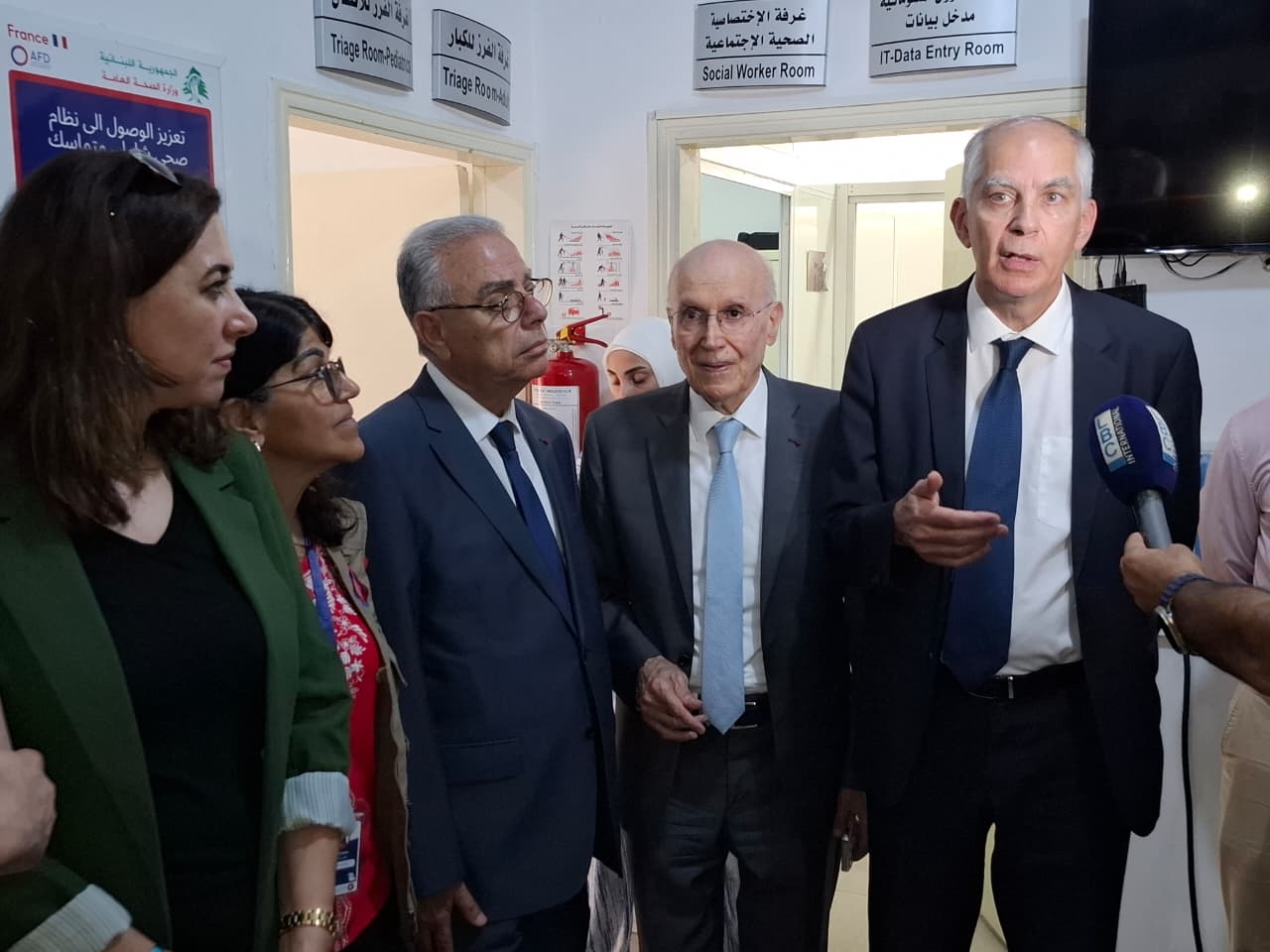
Visit by the French Ambassador to the Amel Centre in Tyre, 24 July 2026
Amel Centre, Tyre
Visit by the French Ambassador · 24 July 2026

At the Outset of the Lebanese War

Civil war broke out in 1975. At a time when people were being killed because of their sectarian identity, Kamel Mohanna placed his photograph on a Christian friend’s identity card.

Kamel crossed Karantina and travelled to Tell al-Zaatar, reaching the most disadvantaged neighbourhoods of Nabaa to see patients. He was appointed chair of the health committee for the area covering Bourj Hammoud, Sin el-Fil, and Nabaa. During the events of 1976, the road between Tell al-Zaatar and Nabaa was closed. He remained in Nabaa and took over Imam Hospital to serve those in need, assisted by a medical team from Médecins Sans Frontières (Doctors Without Borders).

Through Imam Moussa Sadr and Fouad Boustany, former president of the Lebanese Order of Physicians, he met Bernard Kouchner, then head of the Médecins Sans Frontières delegation in Lebanon. Despite their political differences, Kamel and Bernard developed a friendship that has endured over the years and through their diverging paths: one entering his country’s political arena, the other refusing to heed the siren call of power and its privileges.

Injured by a shell that landed nearby during the battle of Tell al-Zaatar, and suffering from a herniated disc, Kamel Mohanna nevertheless continued practising medicine. The Médecins Sans Frontières delegation left Lebanon after a month and a half because of the war. Kamel stayed until the area fell, eventually leaving with the assistance of the president of the International Red Cross and Professor Ernest Majdalani.

Years later, an Algerian employee of Amel remarked that Médecins Sans Frontières had published a 1,200-page book recounting the heroism of its doctors during their two-month mission in Beirut, while devoting just one line to Kamel—a sign of double standards in humanitarian action.

Najdeh: Social Relief

In 1976, a year after the outbreak of Lebanon’s civil war, he joined other Lebanese women and men in founding the humanitarian association “Najdeh: Social Relief.” Its mission was to support displaced Lebanese people from the south and improve living conditions in Lebanon’s Palestinian refugee camps. The association established dispensaries and emergency medical centres.

The creation of this first humanitarian organization was not an act of revenge, but a way of overcoming his own experience by ensuring that no one else would have to endure what he had lived through. Kamel Mohanna’s primary aim was to secure a better future by working as equals, hand in hand.[9]

At the time, he was responsible for coordinating medical care in Beirut’s southern suburbs, Northern Metn, Damour, and areas of southern Lebanon, where he established dispensaries and medical centres.

In 1978, he helped establish the National Committee for the People of Khiam. He then opened a dispensary in Sfeir, in Beirut’s southern suburbs, to serve displaced people who had settled in the area.

1979 • A new chapterAmel

Background and Founding

In 1978, the Israeli army invaded southern Lebanon during Operation Litani. His family home was the first to be razed, followed by the entire village.

“The first house they blew up and looted was our family home, because we symbolized a peasant family that had managed to resist,” Kamel Mohanna explains.

His hometown was subsequently destroyed. Of Khiam’s 35,000 inhabitants, everyone fled except 55 elderly people who were unable to leave.

“The Israeli army rounded them up. There was a massacre. It affected me deeply,” he recalls.

It was against this backdrop that, in 1979, he decided to establish the non-sectarian humanitarian association Amel with a group of friends, including intellectuals and doctors, under the umbrella of the Lebanese National Movement. The name “Amel” means “worker” and was chosen together with his friend Talal Salman. Amel began providing humanitarian assistance in Palestinian camps, particularly in 1982, during the second Israeli invasion and the siege of Beirut.

The serving prime minister, Dr Salim el-Hoss, supported their efforts and provided his patronage to the National Committee for the Sponsorship of Hospital Projects.

Amel undertook a series of projects to establish dispensaries, medical centres, field hospitals, maternity facilities, maternal and child health centres, and rehabilitation centres for people with physical disabilities in some of the most deprived areas of Beirut’s southern suburbs, the Bekaa, and southern Lebanon.

More than 24 centres were opened to fulfil the association’s primary objective: ensuring that the most disadvantaged could exercise their right to health. Alongside its health programmes, Amel opened vocational training centres in Hay el-Karameh and Wadi Abou Jamil in Beirut; Sidon and Tyre in the south; and El Ain, Baalbek, and Hermel in the Bekaa. Three kindergartens were also established in Chiyah, Baalbek, and Hermel.

Expanding Humanitarian Engagement

Amel’s major expansion came in 1982, during the siege of Beirut amid the second Israeli invasion. A Medical Relief Committee, chaired by the then Minister of Health, was established with Kamel Mohanna’s active participation.

The association’s team responded rapidly, establishing three underground field hospitals in Moussaitbeh, Haret Hreik, and Wadi Abou Jamil. These facilities helped save thousands of children, war-wounded people, and other patients. Amel also opened 27 centres and purchased 30 ambulances.

3Underground field hospitals
27Centres opened
30Ambulances

Working closely with the Ministry of Health, Kamel Mohanna managed an extensive medical cooperation programme involving Italy, France, the United States, and Kuwait, enabling more than 450 children to receive medical care.

During Bernard Kouchner’s tenure as secretary of state in the 1980s, Kamel Mohanna succeeded in arranging the evacuation of 1,200 wounded people to hospitals. With support from the Netherlands, he also implemented a rehabilitation programme for people with war-related disabilities, providing 400 prosthetic limbs. These efforts fulfilled the association’s primary objective and helped save thousands of children, war-wounded people, and other patients.[9] Amel became one of the country’s largest NGOs.

Between 1983 and 1984, during the conflict known as the “Mountain War,” he established new field hospitals in Chiyah and Bourj el-Barajneh, as well as an emergency relief and civil defence centre in Wadi Abou Jamil, with support from organizations including Médecins Sans Frontières and Médecins du Monde (Doctors of the World).

In 1986 and 1987, he supervised the establishment of additional Amel emergency relief centres in close cooperation with popular committees and the public sector.

In 1989, as Lebanon endured a particularly devastating period during the events known as the “War of Liberation,” he oversaw the creation of new emergency centres and civil defence teams. He also chaired the government commission responsible for sending war-wounded people abroad for treatment.

Between 1989 and 1991, more than 550 wounded people were evacuated to France and Kuwait. These efforts involved, in particular, Bernard Kouchner, France’s Secretary of State for Humanitarian Action, and Gilles-Henri Tardy, vice-consul and head of the consular office in Lebanon, who worked closely with Lebanese First Lady Mona Hraoui. This cooperation helped save many children wounded in the war.

Rebuilding Post-War Lebanon

Between 1992 and 1993, he played an active role in developing the Franco-Lebanese Protocol, which enabled 100 war-wounded people to receive treatment at Hôtel-Dieu de France Hospital in Beirut at the French government’s expense.

In 1990, he was elected general coordinator of the Collective of Lebanese and Arab NGOs. In 1994, he was elected Regional Focal Point and an observer member of the Executive Committee of the Office of the United Nations High Commissioner for Refugees (UNHCR).

Presidential Decree No. 6322 appointed him as the NGO representative on the Higher Health Council. That same year, he was tasked with addressing the issue of toxic waste in Lebanon and appointed general coordinator of the committee for environmental clean-up.

Between 1994 and 1997, he officially represented Lebanon:

  • At the World Summit for Social Development in Copenhagen;
  • At a United Nations General Assembly meeting held in New York in March 1995;
  • On the follow-up committee of the Arab NGO Conference in Cairo—El Shabaka, a network bringing together more than 500 Arab NGOs—where he was elected Lebanon’s representative and served under the chairmanship of Prince Talal bin Abdulaziz Al Saud.

The post-war period established Kamel Mohanna as a major figure in Lebanon’s reconstruction. Amel launched development programmes while continuing its emergency operations in southern Lebanon and the western Bekaa under Israeli occupation.

In 1996, he actively helped coordinate the work of the Ministries of Health and Social Affairs and NGOs in responding to the consequences of the Israeli aggression.

During this post-war period, Kamel Mohanna also ran twice in parliamentary elections.

Kamel Mohanna • Humanitarian Journey

Amel’s Development and Expansion

From local commitment to international solidarity

1999 Disaster prevention
2010 Amel International in Geneva
2024 45 years of commitment
Kamel Mohanna
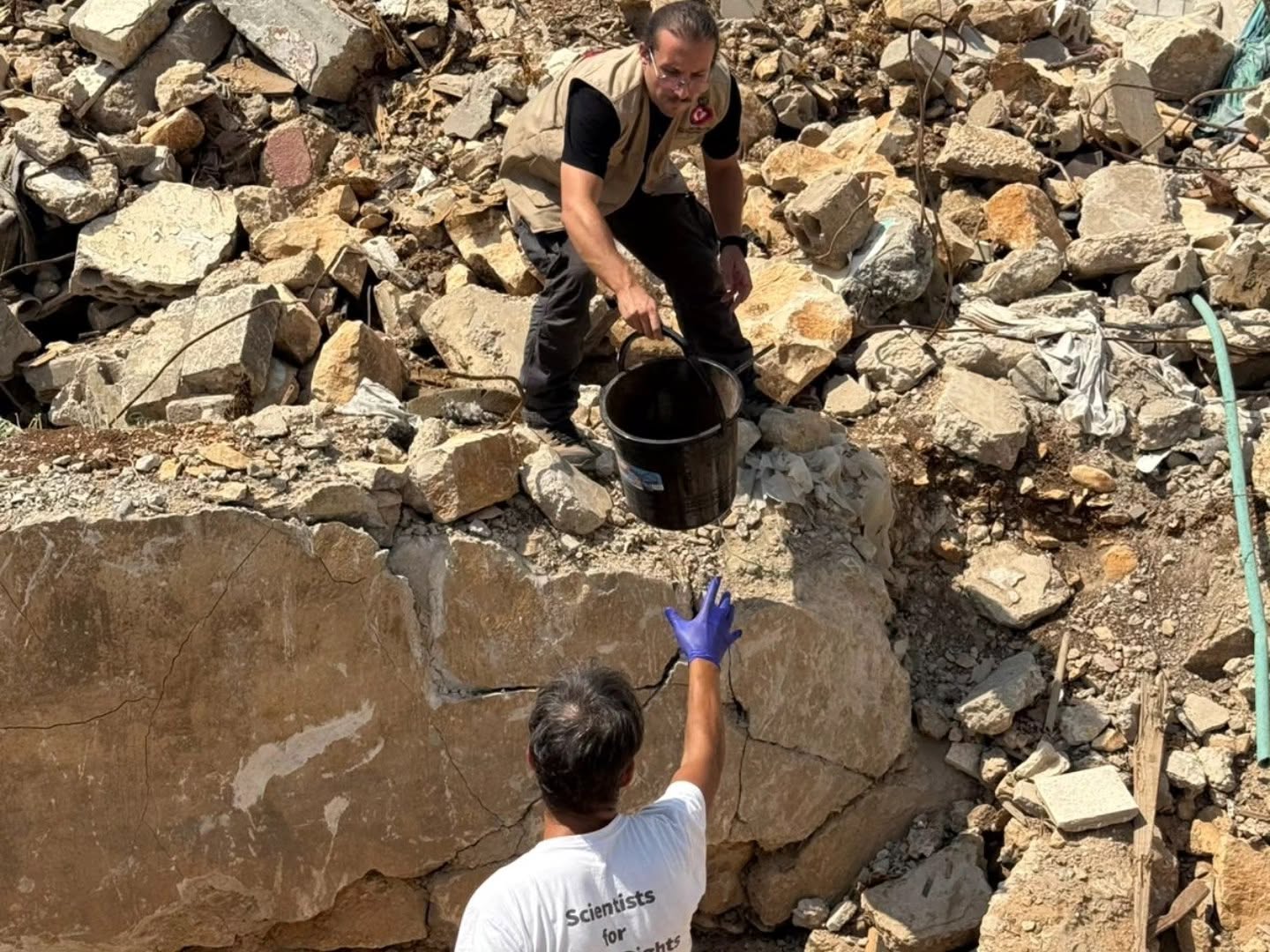
A team from Amel Italy collecting soil samples in southern Lebanon.

Amel’s Development and Expansion

In 1999, Amel oversaw the implementation of a disaster management and prevention programme in Lebanon, supported by the European Commission.

Kamel Mohanna paid particular attention to developing Amel’s health programmes and initiatives to prevent communicable diseases. He also strengthened his engagement with young people by inaugurating a vocational training centre in Beirut’s southern suburbs and launching various education and human rights training programmes in the southern suburbs, southern Lebanon, and the Bekaa. These programmes received support from international donors who recognized the importance of Amel as a locally rooted organization and of its president, Dr Kamel Mohanna.

The association operates in several regions, including Beirut’s southern suburbs, the Bekaa—including Arsal, where residents protected its centre against ISIS during the “Syrian crisis”—and southern Lebanon. Amel also began helping disadvantaged people reintegrate into social and economic life through technical training, while raising their awareness of citizenship and its accompanying rights and responsibilities.

Amel established itself as a credible, effective, transparent, and dynamic association. Rejecting sectarian and political labels, it provides assistance to all disadvantaged people, regardless of their religion, region, or political views. A truly distinctive organization, it works against the prevailing currents of sectarianism and patronage.

The Syrian conflict, which broke out in 2011, marked another turning point for Amel and Kamel Mohanna. As early as April 2012, Mohanna called on partners and donors to support NGOs—particularly local organizations—assisting populations affected by the Syrian crisis. As the driving force behind Amel’s “Emergency Response to the Syrian Crisis,” he was appointed representative of local NGOs on the Humanitarian Country Team, bringing together representatives of United Nations agencies. He also participated in numerous international conferences, tirelessly repeating the need to “help Lebanon, which is helping Syria.”

Forty-five years after its founding, in 2024, Amel had 32 health and social centres, nine mobile medical units, four mobile satellite units affiliated with primary healthcare centres, two mobile education units, and two mobile protection units working with people in street situations. It also had 1,200 volunteers and staff members, 85 per cent of them women, with no political or sectarian affiliation and no allegiance other than to human dignity. The organization reported providing more than 1.8 million services.

2024 snapshot.
Health and social centres
32
Volunteers and staff members
1,200
Services provided
1.8 M+
2010 • An international dimension From local roots to global action

The Amel International Movement

Drawing on his field experience and commitment, Kamel Mohanna made Amel a pioneering model of a local association expanding internationally through close cooperation with organizations and institutions around the world.[5]

As an organization from the Global South, Amel took the distinctive initiative of working beyond its borders, particularly in the West, contributing to solidarity efforts and offering a model of struggle and commitment to peoples’ just causes. Foremost among these are the Palestinian cause and liberation from all forms of dependency and Western colonialism in its various manifestations.

Amel Association International was formally registered in Geneva in 2010, and the organization established local branches in France, the United States, Belgium, and Italy.

Nomination for the Nobel Peace Prize

2023

In 2023, Amel was nominated for the Nobel Peace Prize for the eighth consecutive year, in recognition of its role in advancing democracy, fostering a culture of citizenship, and promoting human rights in Lebanon.

Engagement with Foreign Officials

The credibility of Amel Association International and its president, Kamel Mohanna, has made its centres regular stops on visits by United Nations officials, heads of state, and serving ministers. Visitors have included Ban Ki-moon and António Guterres, who visited Amel while serving as UN High Commissioner for Refugees; French presidents François Hollande and Emmanuel Macron, the latter visiting before his election to the presidency; and ministers from many European countries.

These have included French foreign ministers Bernard Kouchner and Jean-Yves Le Drian, as well as Meryame Kitir, Belgium’s Federal Minister of Development Cooperation and Major Cities Policy, among many others.

These visits and personal relationships provide Mohanna with opportunities to reiterate his positions.

In 2017, during Emmanuel Macron’s visit to Amel’s centre in Ain el-Remmaneh, Kamel Mohanna addressed him about the importance of solidarity and the communities living in the area. In 2020, following the twin explosions at the Port of Beirut, Mohanna met with Macron, who had by then become President of France, and told him:

“Lebanese and Palestinians helped build the Gulf and offered a model of solidarity. You visited the port and saw people standing together, and I, as a Lebanese citizen, feel ashamed to ask you for aid. The approach to this country, with all its human potential, should be different. Is it not shameful that electricity and water have become aspirations for ordinary citizens?”

In July 2020, French Foreign Minister Jean-Yves Le Drian visited Amel’s centre in Haret Hreik. The meeting was marked by sharp criticism. Mohanna told the French official:

“France has no interest in Lebanon’s collapse and should support the country rather than abandon it.”

He explained to the minister that the presence of 600,000 Syrians who had learned to handle weapons during their military service in Damascus represented a dangerous ticking time bomb.

Le Drian replied: “We, too, in France, face the terrorist threat.”

The humanitarian responded:

“How can you make such a comparison between France and Lebanon? When one person dies in your country, it makes the headlines. Here, we have tens of thousands of people missing or displaced, whether in Iraq, Yemen, Palestine, or Lebanon, and there is not a single line in your newspapers.”

The Lebanese physician concluded:

“That is what I call the double standard between you in Paris and us in Beirut.”

At a ceremony held at the Belgian Embassy on 11 December 2023, during which he was honoured with the rank of Commander of the Order of the Crown, conferred by the King, Kamel Mohanna outlined Lebanon’s situation and highlighted the challenges it had faced in recent years.

He recalled the uprising of 17 October 2019, marked by the leading role of Lebanese women and young people who rallied behind the Lebanese flag in support of a free, democratic, civil state. He then described the collapse of the state and the impoverishment of the vast majority of the Lebanese people, alongside the challenges facing displaced people and refugees, who now represented more than half of Lebanon’s population—the highest number of refugees per capita in the world.

He also addressed the twin explosions at the Port of Beirut, which destroyed a large part of the capital and caused enormous human and material losses, and whose aftermath remained unresolved.

Mohanna continued by referring to:

“The profound turmoil currently affecting southern Lebanon, and our concern over the extreme violence inflicted on the Palestinian population, particularly in Gaza. The brutal deaths of thousands of children, women, and innocent civilians, and the destruction of healthcare infrastructure, are unacceptable. All of this constitutes a violation of international humanitarian law, which we firmly condemn. The stability of the entire region depends on finding a just solution to the Palestinian question.”

Kamel Mohanna • Thought and Commitment

Reflections

Civil society, solidarity and citizenship

Civil society Equality Solidarity
Photograph accompanying Kamel Mohanna’s reflections
Virtually in a state of emergency for forty years, Lebanon embodies a struggle for a fairer and safer world.

On Civil Society

Civil society represents the true arena of struggle in which the forces of change converge and interact, moving beyond primary, family, tribal, communal, religious and sectarian ties, and establishing new relationships between individuals and groups based on shared interests and unifying ideologies. In doing so, it generates a national discourse and a national strategy aimed at achieving greater democracy and stronger guarantees for human rights. Civil society also constitutes a space of freedom and a pathway to citizenship and democracy.

In fact, a civil society without politics or a struggle for freedom and democracy remains detached from reality. Its true meaning rests essentially on a critical stance that requires an understanding of both political and economic structures. In other words, without a civic culture, civil society cannot formulate or develop public policy.

There can be no civil society without a state, and national unity necessarily depends on close cooperation between individuals, society and the state. National political parties, voluntary organisations and efforts to unite democratic forces are integral components of the forces of change within civil society.

However, maintaining genuine independence from political parties while developing a thorough understanding of a country’s political and economic structures is undoubtedly the main challenge facing societies moving towards change.

Unfortunately, some Arab intellectuals have used the voluntary sector for political purposes, seeking to compensate for the defeats suffered by nationalist and left-wing movements. Today, civil society institutions have multiplied and become an instrument for advancing colonial projects and plans through slogans that exploit fundamental principles such as human rights, the right to development and international humanitarian law, particularly in conflict zones. Moreover, these same organisations lack transparency and vision. Another unspoken aspect of the relationship between donors and civil society organisations is the political role of foreign aid: perpetuating a relationship of dependency, with generous funding silencing any questioning of that relationship.

In the face of excessive investment in civil society, Amel offers a democratic experience for Lebanon, society and its citizens. Kamel Mohanna states: “After the collapse of the Soviet Union, civil society became a label for everything. Those in power have their own civil society, and the opposition has its own. There is a specific definition of civil society: it includes political parties, trade unions and local institutions, including municipalities, and is not limited to associations. What we see today is a business and an army of people motivated solely by their salaries, talking about democracy in hotels and at conferences, when there can be no democracy without work on the ground and development.”

He explains: “Most NGOs are entities with an agenda that serves the interests of foreign powers. They follow an undeclared political line.”

On Partnerships

As coordinator of the collective of Lebanese and Arab NGOs, Kamel Mohanna stresses the importance of developing partnerships within Lebanese civil society and strengthening cooperation between local and Western NGOs, based on equality and the rejection of neocolonialism.

On North–South Relations

The approach to decolonising humanitarian action recognises the need to work as partners of affected populations, rather than as guardians imposing ready-made dogmas that are entirely disconnected from different sociocultural contexts. It is a roadmap that requires unity and resolve on a global scale.

In an unprecedented initiative that runs counter to traditional dynamics, the Amel Association decided to reach out from the South to the North, sharing its experience to help build a fairer and more humane world together. As Kamel Mohanna notes: “We have always advocated equitable relations between the North and the South, free from subordination, as well as the struggle against double standards, which are particularly prevalent in humanitarian relations. This is why we are committed to the just causes of peoples around the world, starting with the Palestinian cause. Far from limiting our action to speeches about the world’s misery delivered in grand hotels, we work every day alongside ordinary people and vulnerable communities.”

The author continues: “As the gap between the North and the South widens every day, we fight tirelessly for an equitable distribution of wealth and against rising poverty and the marginalisation that accompanies it.”

On Youth

The future has arrived, and it is in the hands of young people. This multilingual generation, familiar with modern technologies, is progressive and looks towards the future. It accepts people of different nationalities, ethnicities and religions and therefore embodies hope. By letting go of the ego and thinking of others, young people allow their potential and talents to flourish, bringing the greatest benefits to the rest of humanity.

On Change

The stages of change require a just model, and the accumulation of these practices makes it possible to reach a higher level of transformation. If one hundred associations in Lebanon replicated Amel’s model, social change would be inevitable; political change would follow automatically once social transformation was underway.

On the Arab World

The mobilisations in Tunisia and Egypt represented the first stirrings of a revolution. The counterrevolution was Daesh and its actions, in the aftermath of which religious institutions will be compelled to reform. The future of the Arab world can only be viewed with optimism.

On Refugees

Lebanon is a very small country hosting two million refugees, which would be equivalent to twenty-two million refugees in France. In France, debates focus on expelling migrants rather than welcoming them. It is shameful that Europe closes its borders like a fortress. Beyond the political responsibilities of its governments, it fails to uphold the moral and legal principles of asylum. Kamel Mohanna condemns Europe’s failure to apply either the Geneva Conventions or the European Convention on Human Rights.

On Lebanon

Lebanon is the mirror and laboratory of the region. Its importance to the major powers stems from that role. Virtually in a state of emergency for forty years, Lebanon embodies a struggle for a fairer and safer world. All the region’s problems converge within its territory. Power rests in the hands of a small number of people who maintain self-serving relationships with foreign actors instead of placing those relationships at Lebanon’s service. Every group in the country is a minority. In this sense, Lebanon offers a model of coexistence if the Lebanese focus on the values of citizenship.

Kamel Mohanna • Philosophy and Journey

Kamel Mohanna’s Approach

Human dignity, commitment and collective action

PrinciplePositionPractice
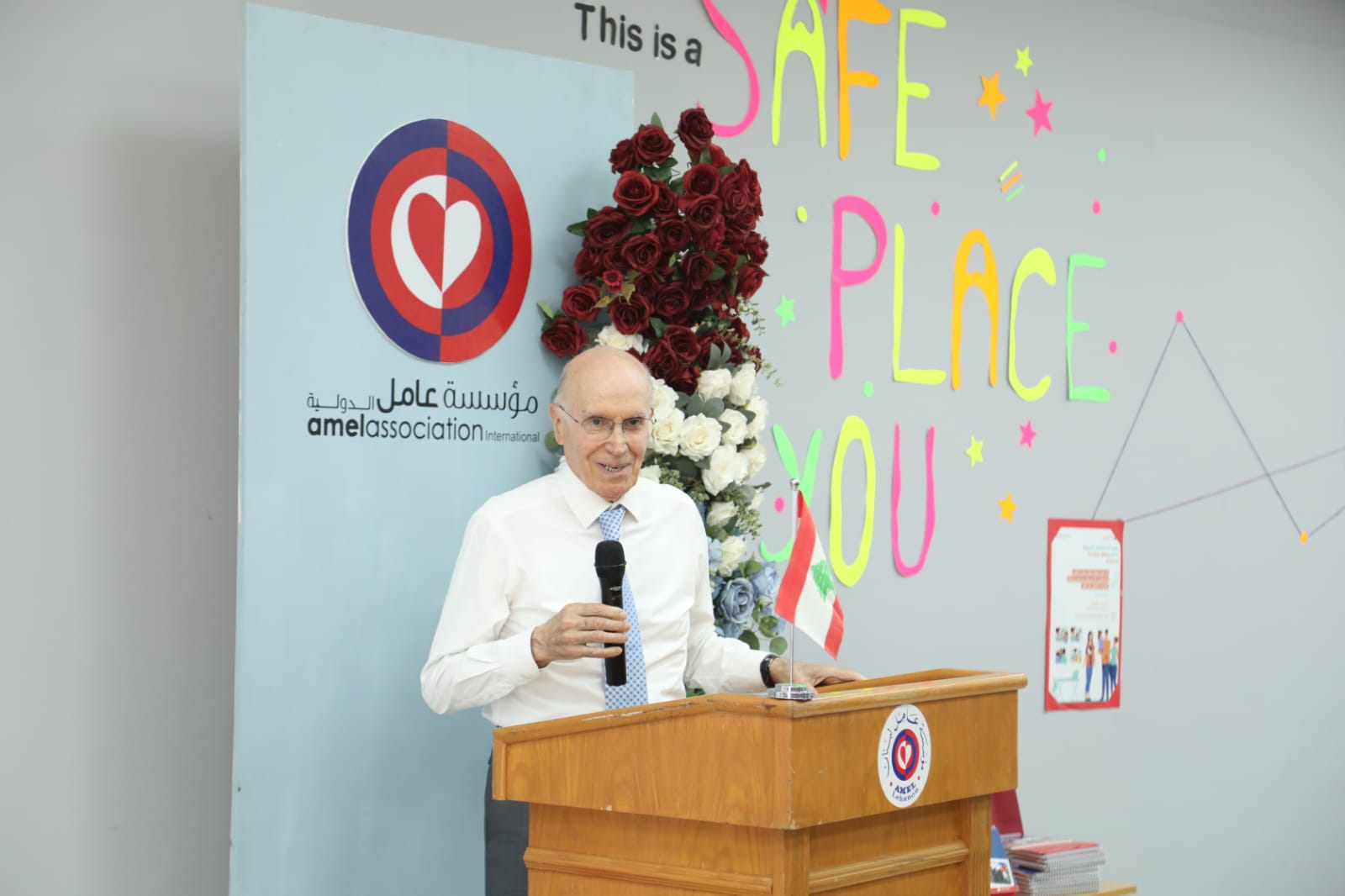
Kamel Mohanna delivers his speech at Al-Zaytouna Library
Kamel Mohanna delivers his speech at Al-Zaytouna Library.

Kamel Mohanna’s Approach

  1. Positive thinking and lasting optimism: Kamel Mohanna embraces positive thinking and unwavering optimism, grounded in his belief in people’s capacity to give. He continually looks for strengths in those around him and those he serves, drawing on them to unlock their potential for growth. He firmly believes that one should not dwell on negative aspects, since obstacles are inherent in the work, just as imperfections are part of human nature. Human and material obstacles can be overcome through optimism, positivity, generous individual initiatives, and a willingness to assume responsibility. This outlook is expressed in his rule of the three Ps: “Principle, Position, Practice”—cultivating the art of getting things done rather than complaining.
  2. Faith in people and their rights: His philosophy of work rests on his belief in human beings and their rights to health, freedom, and development, as well as their capacity to take responsibility and exercise self-determination. These are the foundations for nurturing free-thinking individuals and engaged citizens. These seeds of change come together under the principle of a culture of humanity. This means recognizing a just cause that requires leadership and accepting the responsibility of serving it. He often repeats that there is no such thing as a weak person, only someone who has yet to discover the source of their own strength. He focuses on young people and their potential, working with them to uncover their talents. In this way, life acquires its full meaning, while difficulties become less significant.
  3. Leadership through empowerment: His leadership style is based on listening, understanding, acceptance, delegating responsibilities, creating opportunities for others to take responsibility, encouraging initiative, and fostering camaraderie without arrogance, superiority, authoritarianism, or domineering behaviour. It begins with the question: “Where is the good in each person, and how can we nurture it?” It also involves strengthening relationships with friends, turning neutral parties into friends, and neutralizing opponents. Leadership is teamwork, and a true leader is someone who creates other leaders. This is how Amel grows: decisions emerge from the people—the leaders—working within the association.

A Model for Change Based on Human Dignity in the Arab World

  1. Way of life: For Kamel Mohanna, humanitarian work is a vocation. He seeks and expects nothing from anyone. Leading a simple and highly austere life, he believes that “those who work in humanitarian action and public service must themselves experience suffering in order to feel the suffering of others.”
  2. Independence: Kamel Mohanna states that his work is guided by a radical, transformative, civic ideology and that he has never joined a political party. Independent, he refuses affiliation with any party.
  3. Politics: Kamel Mohanna practises a politics concerned with people’s needs, distancing himself from political manoeuvring that discusses their problems without working to resolve them. He stood for parliamentary elections twice: first in Beirut in 1992, and then as an independent candidate in southern Lebanon in 1996. His friends raised USD 35,000 for the campaign; he organized 400 meetings and received 16,000 votes. Having come to understand how the political game works, he has since refused to run again, despite offers to form an opposition electoral list. He is also approached whenever a new government is formed, but consistently declines offers to join it. He says that he wants and expects nothing from anyone. He refuses external backing, which, if accepted, would enable him to establish a political party. He rejects any support that comes with conditions or seeks to shape his thinking. He identifies himself as Lebanese, an Arab from the South, and a believer in the Palestinian cause.
  4. Balancing words and deeds: Kamel Mohanna stresses the importance of maintaining a balance between what one says and what one does.

Quotations

  • “Humanitarian commitment means standing alongside others, regardless of their political affiliation, geographical origin, or religion.”
  • “In the West, the word ‘humanitarian’ evokes emergency response. In Arabic, however, ‘humanitarian’—insani (إنساني)—resonates with ‘people’—nas (ناس)—and carries a collective social and cultural meaning.”
  • “We must work solely for human dignity, combining a personal vocation with collective action. This is the only way it can work. We must learn to say WE rather than I, applying the three Ps: Principle (WE think), Position (WE affirm), and Practice (WE act). Working on the ground means acting in solidarity, not charity, and including all sections of society without discrimination.”
  • “When someone dies in France, it makes the headlines. In the Arab world, we have tens of thousands of people missing or displaced, whether in Iraq, Yemen, Palestine, or Lebanon, and there is not a single line in your newspapers. This is what I call double standards.”
  • “‘Reform from below’ will become a driving force for ‘change at the top.’”
  • “Society can develop only when every individual takes responsibility, unlike the prevailing situation in our country, where one person makes the decisions and everyone else merely carries them out.”
  • “No one chooses their nationality or country. We must strive for a fair distribution of wealth and a state of social justice. What matters is the human being.”

Personal Life

Kamel Mohanna is married to Fayda, whom he calls “the Saint.” She is a wife, mother, fighter, and source of encouragement, alongside their children Zeina, Assaad, Mariam, and Nour, who were raised according to the principles of humanitarian work.

She teaches civic education at the school attended by their eldest son, Bachar, who died during a school skiing trip while saving his friends.

On the night of Tuesday, 14 January 1992, after a day of skiing, a classmate woke up to use the bathroom. With the electricity out, he lit a candle and placed it at the foot of the bed. The mattress caught fire. He woke his friend, and they tried unsuccessfully to open the window. They then called for help from Bachar, who was sleeping in another room and managed to get them out.

However, while trying to wake three other friends who were asleep, Bachar became trapped in the room. All four died from asphyxiation.

Kamel Mohanna explains that this tragedy did not deter him from his work. On the contrary, it strengthened his resolve and determination to pursue his humanitarian mission.

Awards and Honours

His work and commitment have earned him the following recognition and honours:

  • 1974: Symbol of Love and Giving, National Children’s Day Commission, Lebanon.
  • 1980: Order of Merit for his contribution to improving the human condition, Lebanese Peace Committee.
  • 1995: Order of Merit, Lebanese Peace Committee.
  • 1997: Knight of the Legion of Honour, France.
  • 1998: Laure and Joseph Moghaizel Award for Human Rights and Civil Peace, awarded to Amel.
  • 1998: Knight of the National Order of the Cedar, Lebanon.
  • 2000: Man of the Year and Cultural Veteran, Antelias Cultural Movement, Lebanon.
  • 2000: Honour awarded by the Lebanese Order of Physicians.
  • 2006: Honour awarded by the French Senate.
  • 2006: Arab Forum Award.
  • 2007: Participation in the Conference for Inter-Lebanese Dialogue in La Celle-Saint-Cloud.
  • 2009: Officer of the Legion of Honour, France.
  • 2010: LiberPress Free Press Award.
  • 2010: Certificate of Honour, Lebanese League.
  • 2016: Ghazal Foundation Peace Award.
  • 2016: Nominee for the Nobel Peace Prize.
  • 2017: Annual Peace Award, Ghazal Foundation for Education and Research.
  • 2018: Nominee for the Nansen Refugee Award, nominated by Medico International.
  • 2019: Sharjah International Award for Refugee Advocacy and Support (SIARA), awarded by The Big Heart Foundation in cooperation with the Office of the United Nations High Commissioner for Refugees (UNHCR).
  • 2021: Award from the “Not to Forget Sabra and Shatila” Committee, Italy.
  • 2023: Commander of the Order of the Crown, Belgium.

Publications

According to political scientist and former Lebanese Finance Minister Georges Corm, Kamel Mohanna’s intellectual work preserves the memory of civic action in Lebanon. He adds that the body of work formed by Mohanna’s books constitutes an essential reference for anyone seeking to understand and explore the historical roots of Lebanese civil society, engage with present realities, and look towards the future.

  1. Confronting Overinvestment in Civil Society Organizations: A Vehicle for Democratic Experimentation to Develop Citizens and Build a Nation (in Arabic).
  2. The Dimensions of Development and Authoritarian Globalization for the Amel Foundation and the Civil Society Sector (in Arabic).
  3. Health, from the Fires of War to the Repercussions of the Pandemic: The Amel Foundation and Civil Society Prevent the Disintegration of Lebanese Society (in Arabic).
  4. The Dimensions of Development and Authoritarian Globalization: Amel Association International and Civil Society in Lebanon (in Arabic).
  5. Amel… On the Road to the Nobel Prize (in Arabic).
  6. A Committed Doctor amid the Turmoil of Peoples: Difficult Choices, a biographical interview with Chawki Rafi. Published in Arabic by El Farabi in 2013, in English in 2016, and in French by L’Harmattan, Le Point, Paris, in 2015.
  7. Dr Kamel Mohanna, Civil Society and Volunteering: The Example of Amel Association. El Farabi, 2013.
  8. Dr Kamel Mohanna, Volunteering and Civil Society. Dar Farabi, 2014.
  9. Dr Kamel Mohanna, Confronting the Misuse of the Concept of Civil Society. El Farabi, 2022.
  10. Dr Kamel Mohanna and Dr Mustapha Hijazi, The Role of Civil Society in Addressing the Risks Facing the Lebanese Family, 2014.
  11. Dignity, Humanity, and Solidarity: Amel Association International’s Civic, Universal, and Non-Discriminatory Approach to All Vulnerable People Affected by Crises, Revue Santé, 2017; and Impact of the Syrian Crisis in Lebanon: Civil Society as a Vector of Change, Humanitarian Alternatives, 2017.
  12. Kamel Mohanna, National and International NGOs: Equal Partners? In On the Road to Istanbul: Humanitarian Accountability Report. CHS Alliance, Geneva, 2015.
  13. Rebuilding Health after Conflict. Revue Santé, 2016.
  14. Dr Kamel Mohanna and Pierre Micheletti, Let Us Help Lebanon, Which Is Helping Syria. Libération, Paris, 2013.
  15. Dr Kamel Mohanna, We Must Help Lebanon, Which Is Helping Syria! Revue Humanitaire, No. 38, 2014, pp. 78–83.
  16. Dr Kamel Mohanna, Humanitarian Action: The Perspective of an Actor from the South. Revue Humanitaire, No. 33, 2012.

Humanitarian Engagement

  • Founder and President, Amel Association International (1979–present).
  • Co-founder, “3 L” Movement for Solidarity, Dignity, and Humanity with People in Exile, established in connection with Amel’s nomination for the Nobel Peace Prize.
  • General Coordinator, Collective of Lebanese and Arab NGOs (1990–present).
  • NGO Representative, Lebanese Higher Health Council (1980–present).
  • Honorary President, Amel France (2015–present).
  • Founder, Najdeh Association (1976).
  • NGO Representative, Thematic Group on Conflict, World Humanitarian Summit (2015–2016).
  • NGO Representative, London and Kuwait Conferences on Syria (2013–2014).
  • Expert, World Health Organization (WHO) (1990–1995).
  • Board Member, Nudge Lebanon (2018–present).
  • Expert, Civil Society Group, International Organisation of La Francophonie (2017–present).
  • Civil Society Representative, Conference for Inter-Lebanese Dialogue, La Celle-Saint-Cloud, France (2008).
  • Founding Member, Mutual Assistance Society for Members of the Legion of Honour—Lebanon Section.
  • President, General Union of Lebanese Students in France (1968–1970).

Conference Participation

  • Euro-Mediterranean Movement for Solidarity, Dignity, and Humanity with People in Exile, Rome, 2018, organized by Amel Association International and Samusocial International.
  • “Dignity, Solidarity, and Humanity with People in Exile: Innovative Measures,” Athens, 2017, organized by Amel Association International and Samusocial International.
  • “Localization of Humanitarian Action,” Beirut, 2017, organized by the French Red Cross Fund.
  • Conference marking the 50th anniversary of the Mérieux Foundation, Annecy, 2017, organized by the Mérieux Foundation.
  • “Humanizing the Reception of People in Exile,” Paris, 2017, organized by Amel Association International and Samusocial International.
  • Anniversary conference of the French Development Agency (AFD), Paris, 2016, organized by AFD.
  • AidEx, Brussels, 2017.
  • World Humanitarian Summit, Istanbul, 2016, organized by the United Nations.
  • ICVA Annual Conference, Geneva, 2016.
  • Humanitarian General Assemblies, Annemasse and Grenoble, 2015 and 2016, organized by Humacoop.
  • World Humanitarian Summit Global Consultation, Geneva, 2015, organized by OCHA.
  • Conference on the History of Humanitarian Action, Geneva, 2015, organized by the International Committee of the Red Cross (ICRC).
  • Conference on Resilience and Humanitarian Action, Marseille, 2015, organized by AFD.
  • National Humanitarian Conference, Paris, 2014, organized by the Ministry for Europe and Foreign Affairs.
  • Conference at the Paris Book Fair, 2014.
  • Roundtable, IREMMO, Paris, 2013.
  • Roundtable, Francophone Book Fair, Beirut, 2013.
  • Conference on the Core Humanitarian Standard, Istanbul, 2013, organized by the CHS Alliance.
  • Roundtable on the Mediterranean Region, World Social Forum, Tunis, 2013, organized by the MCA.
  • World Summit for Social Development, Copenhagen, 1995, organized by the United Nations.

Memberships

Kamel Mohanna is also an active member of:

  • The Franco-Lebanese Medical Association.
  • The Lebanese Order of Physicians.
  • The Arab Social Protection Network.
  • The Lebanese-Moroccan Friendship Association.
  • The Lebanese-Chinese Friendship Association.
  • The Mediterranean Citizens’ Assembly.
  • The editorial board of Human and Health Review.
  • The Development Studies Circle.
  • The Arab Cultural Club.
  • The Lebanese Association for Human Rights.
  • The Chronic Care Centre, headed by former Lebanese First Lady Mona Hraoui.
  • The National Action Circle.
  • The Society of Members of the Legion of Honour in Lebanon (SMLH).