



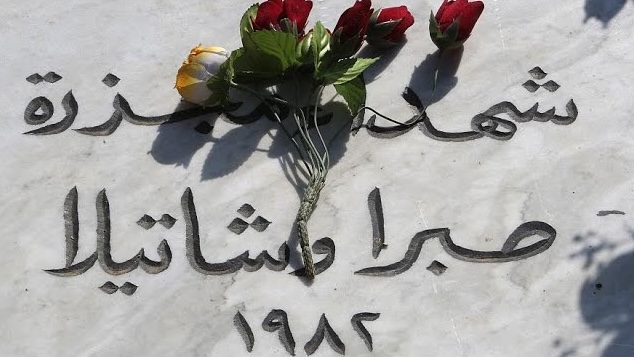

Who am I in the face of the massacre? The doctor? The witness? The victim?
“Amel” at the Heart of the Crisis: An Unhesitating Humanitarian Response
Thirty ambulances from “Amel” and 100 volunteers awaited us outside the camp, led by the heads of Amel Foundation’s Civil Defense: Souli Souli, Salam Daher, Ali Ismail, Ali Al-Ahmar, Subhieh Al-Sheikh Ali, Ghassan Ayash, Ghassan Abu Abbas, Hussein Al-Sheikh, Abdul Karim Khashab, Mohammad Souli, and others—some of whom were later martyred or injured during repeated Zionist attacks.
We thought it would be enough. Despite how horrific the early reports were, they did not begin to reflect the scale of what we witnessed. Three field hospitals in Musaitbeh, Wadi Bou Jamil, and Haret Hreik, 27 centers, and hundreds of volunteers were all mobilized to respond to a massacre we never imagined could happen at such a magnitude.
The Moment of Entry: Blood Everywhere
It was the morning of September 16, during the second Zionist invasion—the same year the Amel Foundation (the National Organization for Popular Action) truly took off. Its actual founding was in 1979, following the first Zionist invasion of the South and the eruption of the disastrous civil war.
“Amel,” born from suffering in defiance of attempts to break Lebanon and strip it of dignity and resilience, carried out humanitarian work that rose above all divisions. Its mission was part of the popular resistance and response to the repeated consequences of Zionist assaults.
“Amel” was—and will always be—at the core of the resistance against the Zionist enemy and against all forms of injustice in the world. That is why we were the first to arrive at the scene of the tragedy… We are “the boy’s mother.”
Confronting the Crime: Unforgettable Moments
As the news of the camp’s siege poured in and the screams of the victims echoed across the horizon, I stood with the “Amel” team, waiting for the moment we could enter the camp and fulfill our duty. When we finally entered, our feet sank into scattered lakes of blood and flying limbs. I looked into the eyes of one of the volunteers—his gaze had turned into two burning coals, on the verge of exploding into tears. I held onto my heart and gripped my soul, willing it not to drown in the rage that might delay my response to those moaning, screaming, or staring blankly as if they had witnessed Judgment Day.
From Tragedy to Resistance
We divided the tasks, prioritizing the treatment of the wounded—but the number of martyrs far exceeded the wounded. It became clear that the perpetrators of the massacre had resolved to exterminate everyone their weapons could reach. Those who weren’t gunned down or stabbed were buried under collapsed walls.
And so we found ourselves before an overwhelming number of corpses and dismembered bodies that we tried to gather. Some humanitarian organizations began to assist us, and a few Western media outlets arrived—before many of the local ones, some of whom were cowardly, and others simply afraid.
More than 3,000 human beings—flesh and blood—were killed. I, the doctor, bore witness to miracles, truly. I saw with my own eyes how a young woman’s face could age a hundred years in a single moment, and how a surviving child could shed his soft, delicate skin for one engraved with fury.
Living Memory: From Massacre to Exhibition
We remained among them for days—counting the martyrs, treating the wounded, comforting those touched by madness, and helping mothers searching for their children among the scattered remains. We witnessed the Nakba all over again—this time, not through the stories of our relatives who fled Palestine, but in person. We were fully present as every inch of Sabra and Shatila camp became a miniature Palestine, and the Nakba multiplied three thousand times over.
The volunteers of “Amel,” along with hundreds from other organizations and the camp’s own survivors and neighbors, spent days recovering bodies, tending to the injured, helping families identify their loved ones, and answering the questions of journalists and visitors—some of whom were stunned into silence, while others fled screaming at the horror of the scene.
Memory Doesn’t Age… and Resistance Continues
The perpetrators of the massacre sought to extinguish our revolutionary spirit, to cut off the lineage of resistance from our wombs, and to end our struggle for Palestine—all of Palestine. But no, and not so fast!
For those who know the truth are freed by it—and led by it to victory. Justice for Sabra and Shatila is a right that does not expire with time. It is a struggle for humanity itself—one that “Amel” continues to fight every day, in Lebanon and on international platforms. Not merely through rhetoric, as is often the case in the Arab world, but through action.
From Memory to Global Cultural Movement
“Amel” has led empowerment programs within Palestinian camps for many years, in partnership with the residents themselves. Over time, the foundation began organizing and hosting conferences and solidarity events in Lebanon and across the world to raise awareness about the Palestinian cause and expose the crimes of the Zionist enemy. One of its latest initiatives is the campaign “100,000 Books from Beirut to Gaza.”
This campaign coincided with preparations to launch a documentary exhibition on the Sabra and Shatila massacre, to be held at the Social Development Center in Haret Hreik. The exhibition is organized in cooperation with the Beit Atfal Assumoud Foundation, the “Keep Sabra and Shatila in Our Memory and Right of Return” Committee, and will open on the anniversary of the massacre, September 16, in the presence of a delegation of European solidarity activists.
Toward a Series of International Exhibitions in Support of Palestine
This exhibition will be the first of its kind in a series that “Amel” aims to launch across several European countries, in cooperation with its partners—chief among them the “Keep Sabra and Shatila in Our Memory and Right of Return” Committee. The goal is for the exhibition to serve as a living witness to the Palestinian tragedy and as a tangible project to rally support for the Palestinian struggle.
The enemy bet on our memory aging, our spirits calming, our hearts fearing, and our minds fading. But what it failed to grasp is that it’s facing a people made of stubbornness and infused with resistance. What a defeated enemy!
At “Amel,” as we honor and salute the resistance in all its forms and expressions, we are now leading the humanitarian front of the global resistance—so that Palestine may have the final word, and so we may be among those working for a more just and more humane world—a world without injustice.